What is an Emergent Strategy?

Method 1: Deliberate Strategy. Typically this has a process of annual strategic thinking, budgeting and planning, with execution over a year or so, and the strategy refined at set (annual) points. A period of strategic analysis, followed by detailed design and planning. This strategy then gets communicated and executed.
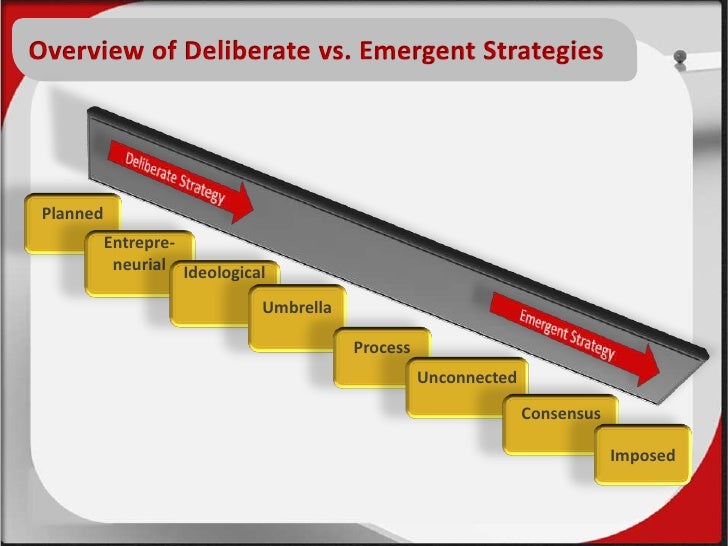
Emergent or deliberate strategies
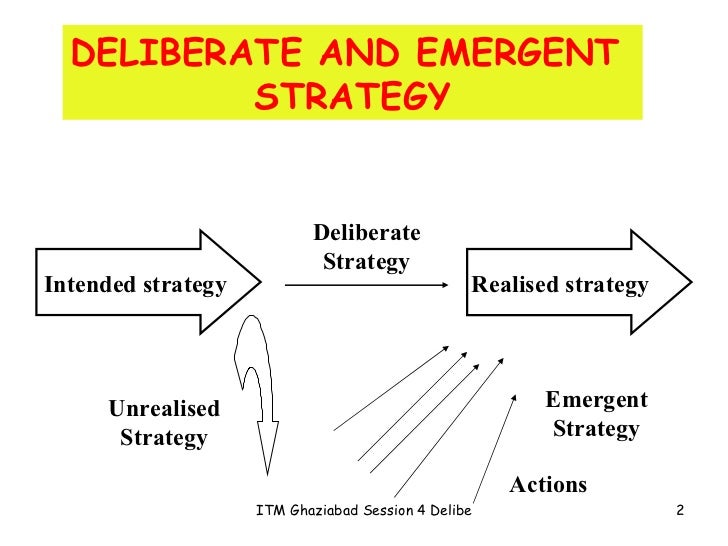
Because change affects the strategies of almost all organizations, understanding the concepts of intended, emergent, and realized strategies is important (Table 1.1). Also relevant are deliberate and unrealized strategies. The relationships among these five concepts are presented in Figure 1.3, "A Model of Intended, Deliberate, and Realized.
PPT Human Resource Strategy PowerPoint Presentation, free download
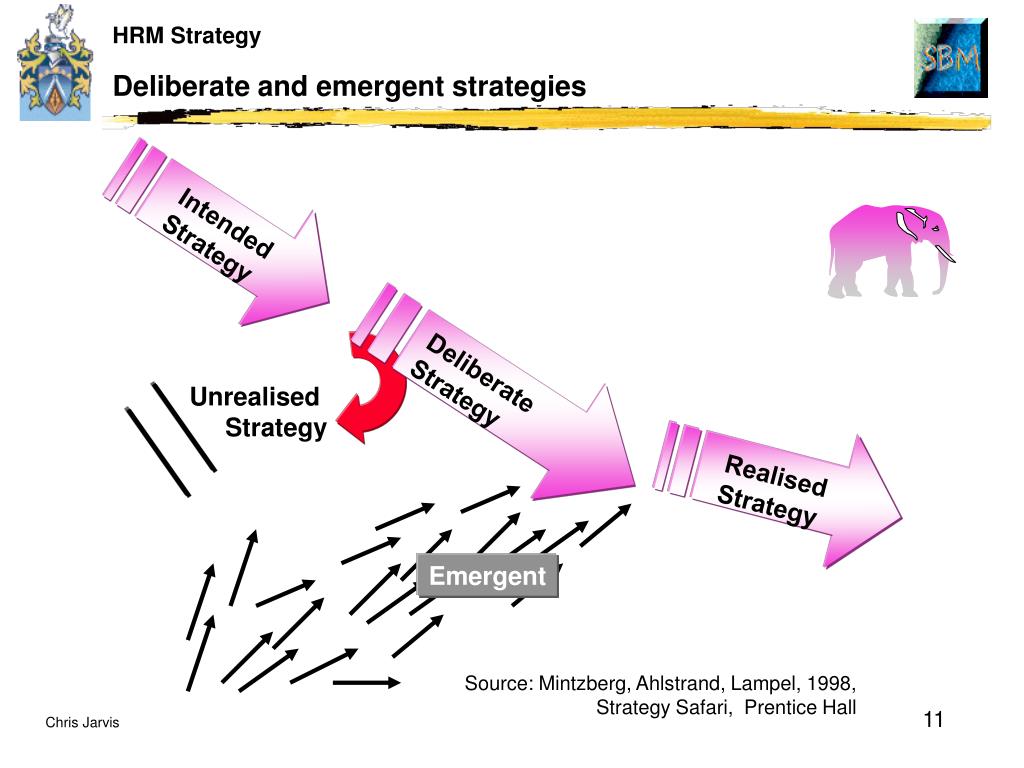
Deliberate strategy and emergent strategy represent two distinct approaches to strategy formulation. While deliberate strategy provides a structured and planned approach, emergent strategy emphasizes flexibility and adaptability. Both strategies have their strengths and weaknesses, and organizations can benefit from adopting a hybrid approach.
Solved Henry Mintzberg’s model of strategy development is
Here's an overview of emergent and deliberate strategy, along with an examination of when it may make sense for your organization to leverage one over the other.. Typically, the difference between success and failure when implementing a deliberate strategy is how well each person or department executes their tasks. Therefore, the strategy.
Deliberate vs. Emergent Strategies

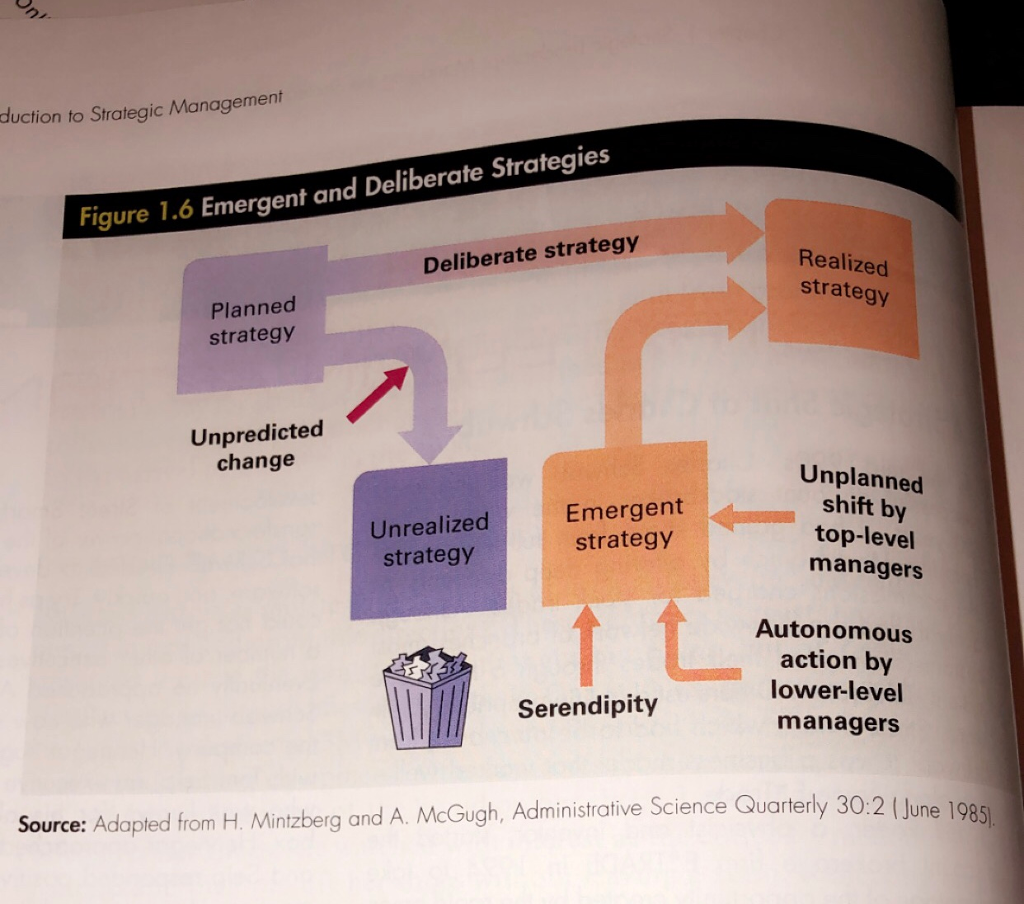
The relationships among these five concepts are presented in Figure 1.6 "A Model of Intended, Deliberate, and Realized Strategy" (Mintzberg & Waters, 1985). Figure 1.5: Strategic Planning and Learning: Intended, Emergent, and Realized Strategies. Strategic planning, usually in the form of a business plan, is a key aspect of creating a new.
PPT Deliberate and Emergent strategy PowerPoint Presentation, free

A deliberate strategy is better for a stable company and has matured, which can then shift its focus from simply surviving to attain growth. When executing a deliberate strategy, a company's success or failure typically depends on the degree to which its employees and managers understand their roles and responsibilities.
PPT Emergent Strategy Diagram SlideModel
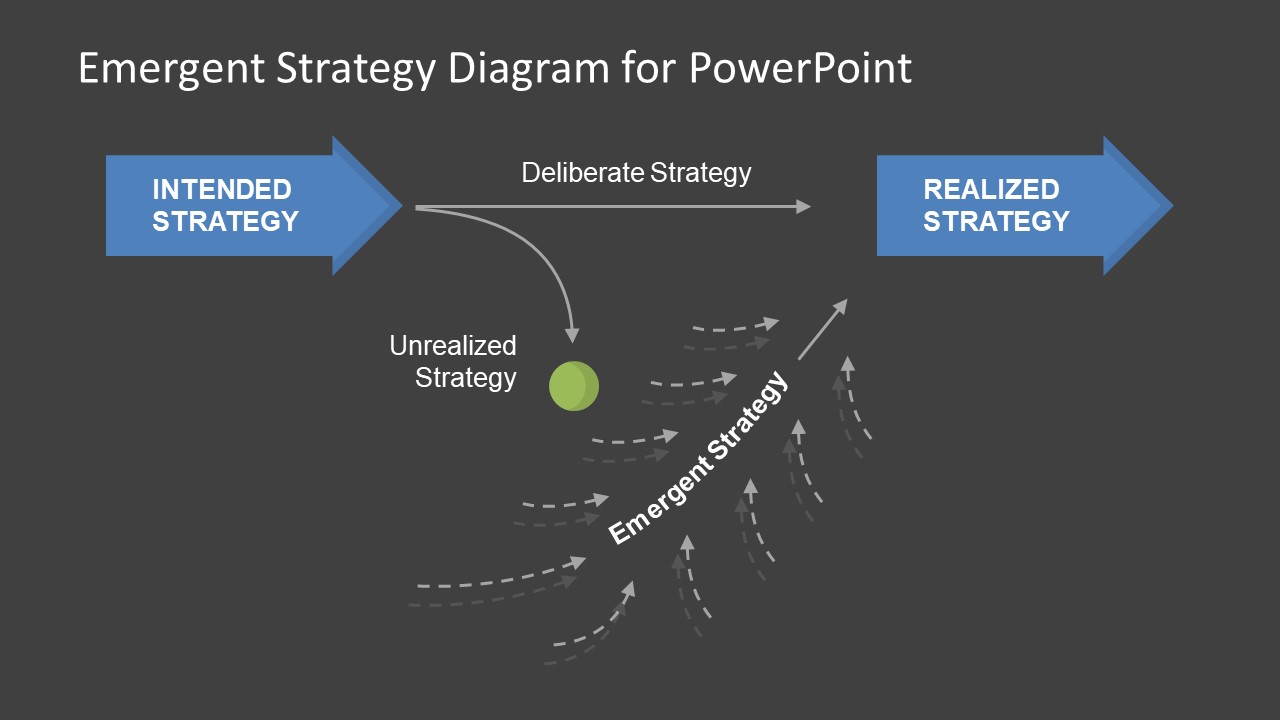
Traditional product strategies tend to drive toward deliberate execution. We present another essential kind of strategy: Emergent. Deliberate strategies are those we're most familiar with and are aimed at executing what we understand. Emergent strategies, on the other hand, are planned, coordinated actions aimed at learning.
Intended and Realized Strategies Strategic Management 2E
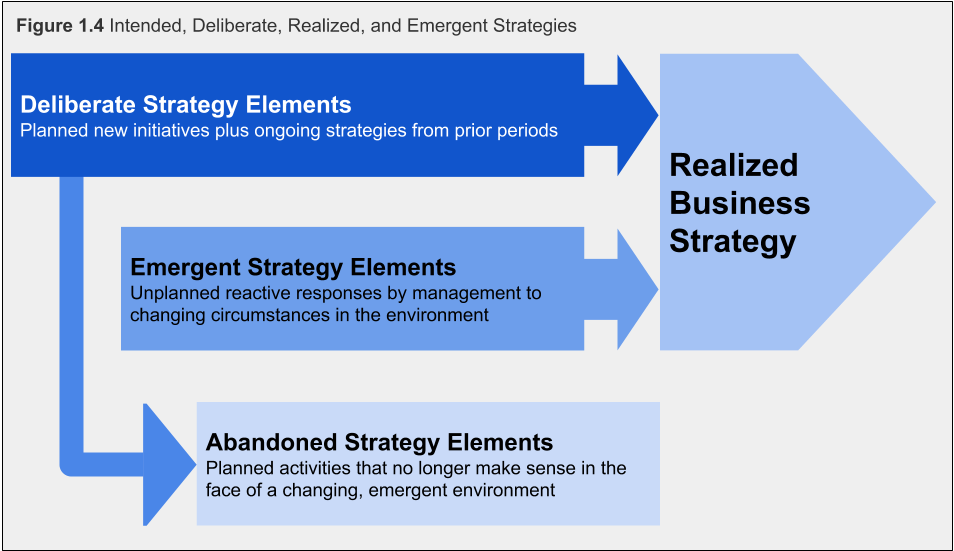
This is the primary determinant of the ultimate realized strategy. It involves the decisions that emerge when managers interpret and apply the intended strategy. It emerges or is the result of individual interpretation and it is affected greatly by the external circumstances of the situation. The ultimate or final result is the realized strategy.
Emergent vs. Deliberate Strategy How & When to Use Each

1. What a deliberate strategy is and what an emergent strategy is. 2. The differences between deliberate and emergent strategies. 3. Tools for implementing an emergent strategy. 4. Before action reviews and after action reviews. 5. Questions that help us determine strategy action. 6. The four quadrants of strategy development. 7. How to use the.
Deliberate or Emergent Strategies YouTube

Emergent strategy versus deliberate strategy. You might have also heard the term "deliberate strategy." This comes about when the leadership in a business takes organised, conscious, and thoughtful actions, based on certain known criteria, such as customer needs, strengths and weaknesses of competitors, market growth, segment size, and.
mbastudier Important things to learn from unit 1

Here are the advantages to using emergent strategy in business: Practicality: Adopting emergent strategies can allow companies to put their resources toward processes that can be more effective than a company's deliberate strategies. Learning: An emergent strategy offers companies a chance to learn from the strategy and its results.
Deliberate vs. Emergent Strategies
Intended and Emergent Strategies. An intended strategy[1] is the strategy that an organization hopes to execute. Intended strategies are usually described in detail within an organization's strategic plan. When a strategic plan is created for a new venture, it is called a business plan. As an undergraduate student at Yale in 1965, Frederick.
Deliberate strategy and emergent strategy Essay Example
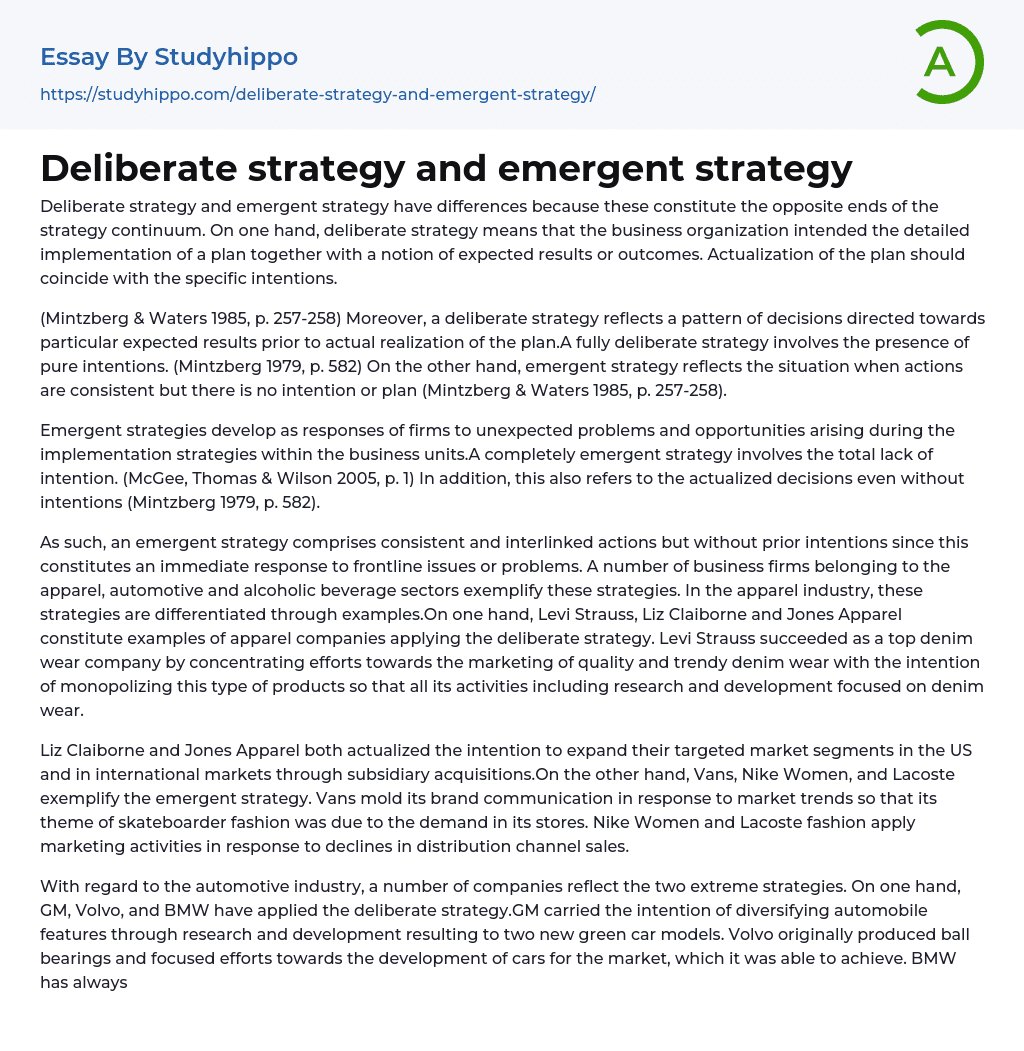
Deliberate strategy in this regard has a top down approach which involves only top management of the organization whereas emergent strategy is bottom-up and involves all functions in the organization.
Mastering Strategy Art and Science
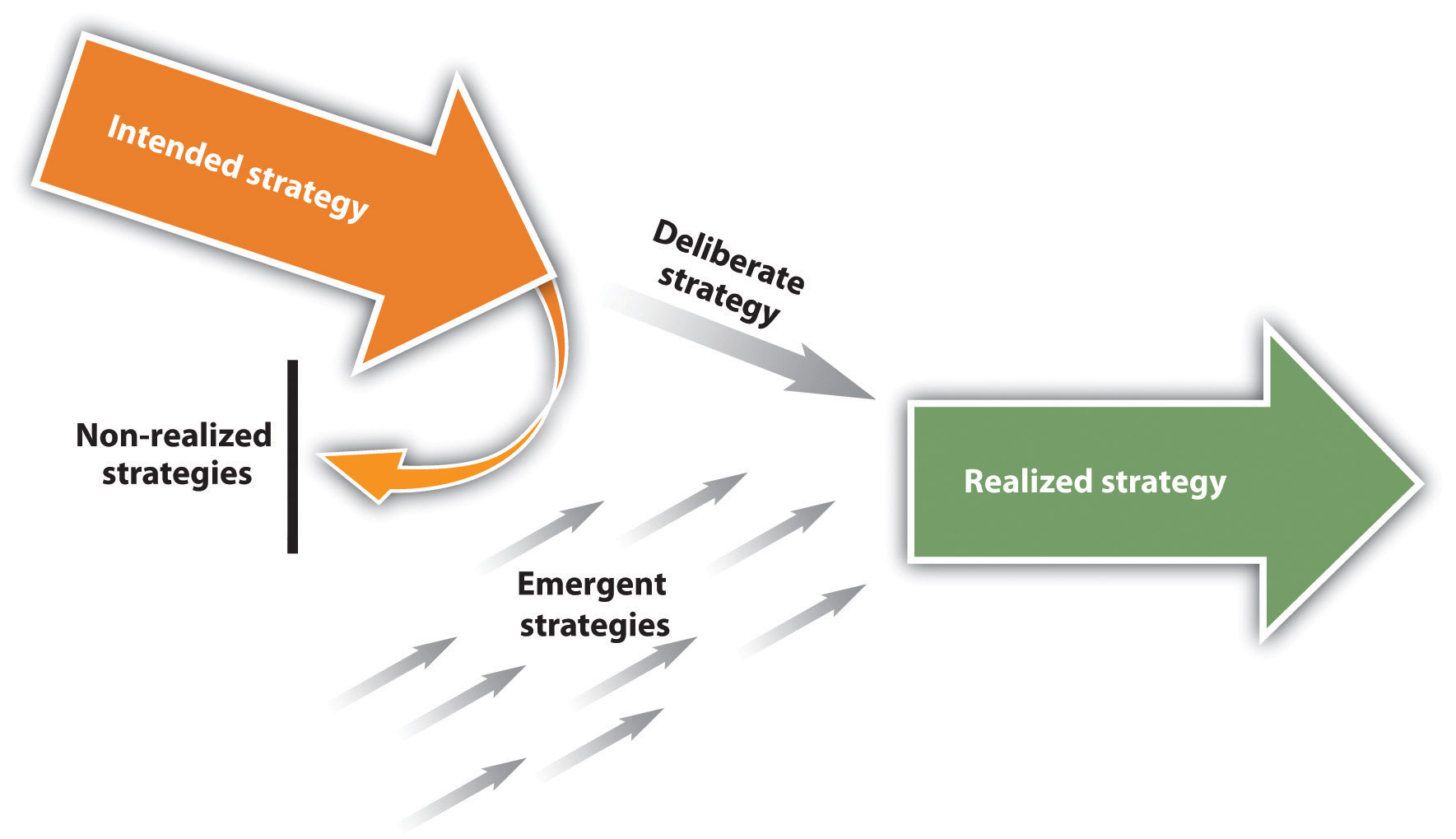
Realized Strategy. A realized strategy is the strategy that an organization actually follows. Realized strategies are a product of a firm's intended strategy (i.e., what the firm planned to do), the firm's deliberate strategy (i.e., the parts of the intended strategy that the firm continues to pursue over time), and its emergent strategy (i.e., what the firm did in reaction to unexpected.
Intended, Emergent, and Realized Strategies Mastering Strategic
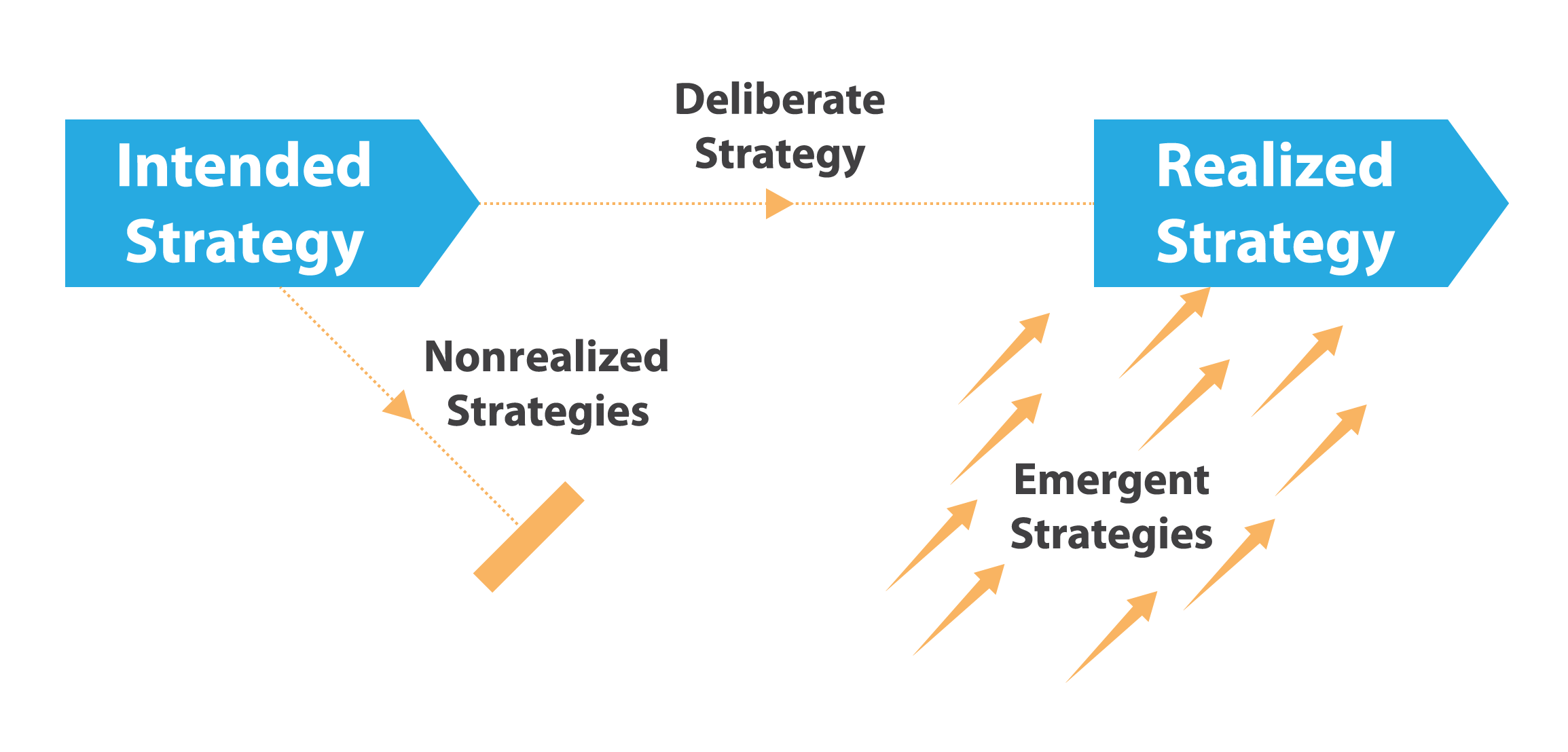
Deliberate VS Emergent Strategy: How your company can be innovative and efficient at the same time. The effective execution is usually seen as the difference between success and failure. 2) The.
Management Bytes from MandE Strategy 14
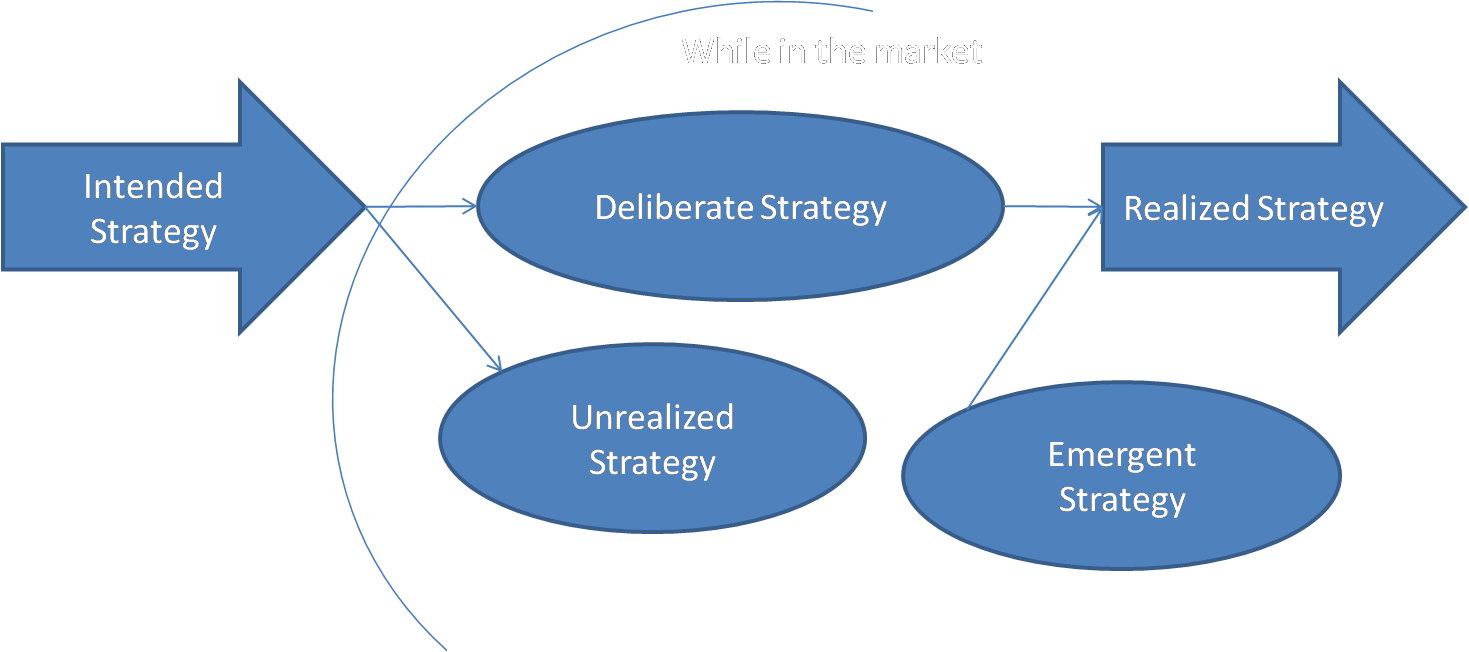
Intended and Emergent Strategies. Figure 1.3 A Model of Intended, Deliberate, and Realized Strategy. An intended strategy is the strategy that an organization hopes to execute. Intended strategies are usually described in detail within an organization's strategic plan. When a strategic plan is created for a new venture, it is called a.
.